Spelt Bread ('Dinkelbrot')
Spelt Bread ('Dinkelbrot')
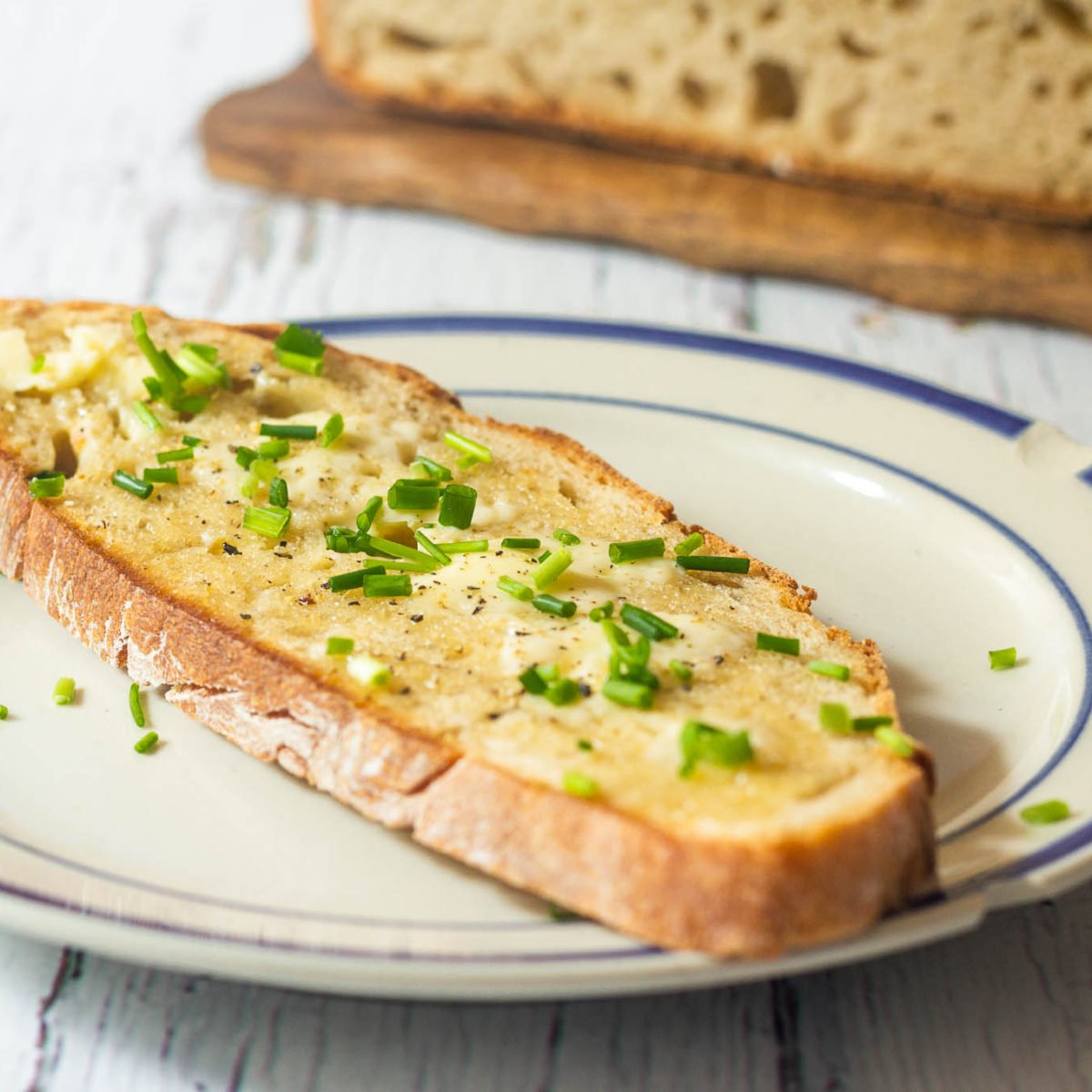
- Prep time
- 14 min
- Cook time
- 31 min
- Yield
- 1 serving
- Difficulty
- HARD
Ingredients
- For the poolish:
- 100 g (3.5 ounces) spelt bread flour (German Type 1050)
- 100 g (3.5 ounces) water, at room temperature
- 1 g (0.035 ounces) fresh yeast
- For the cooked batter ('Kochstück'):
- 50 g (1.76 ounces) spelt bread flour (German Type 1050)
- 250 g (8.82 ounces) water, at room temperature
- 10 g (0.35 ounces) salt
- For the autolyse dough:
- 350 g (12.35 ounces) spelt bread flour, (German Type 1050)
- 40 g (1.41 ounces) water, at room temperature
- 5 g (0.18 ounces) fresh yeast
- 5 g (0.18 ounces) canola oil
- Other:
- Potato starch, for dusting
Instructions
- 1
Prepare the poolish and 'Kochstück':
- 2
Briefly mix together the flour, water, and yeast for the poolish until homogenous. Cover the poolish with plastic wrap and let it sit at room temperature (68-77 °F | 20-25 °C) for 2 hours. Once the 2 hours have passed, transfer the poolish into the fridge and leave it to ferment for 24 hours.
- 3
In a small pot, combine the flour, water, and salt needed for the 'Kochstück'. Heat the mixture up over medium heat stirring constantly until the starch gelatinizes and you have a smooth paste. Cook the paste for about 2 minutes over low heat, then transfer it into a bowl and let it cool down completely. Cover with plastic wrap and set in the fridge overnight or until ready to bake.
- 4
Assemble and knead your autolyse dough:
- 5
In a large bowl, combine the rest of the flour and the 'Kochstück'. Add the water and mix briefly with a wooden spoon until the water is well incorporated. Cover the dough with plastic wrap and let it sit for 30 minutes to properly hydrate ('autolyse'). It's ok if the dough seems a little dry at this point.
- 6
Once the 30 minutes have passed, add the poolish, yeast, and canola oil to your autolyse dough. If using a stand mixer, knead the dough on the first setting for 8 minutes followed by 1 minute on the high setting. If kneading by hand, knead the dough until it has firmed up and becomes less sticky.
- 7
Let the dough rise:
- 8
Let the dough rise in a large bowl that is covered with plastic wrap until it has doubled in size. This can take anywhere between 2-4 hours depending on the temperature in your room. Trust your intuition when it is ready. While rising, the dough needs to be folded 2 times. Do this 30 and 60 minutes after you have finished kneading the dough. Lightly wet your hands and fold the dough over itself 3-4 times.
- 9
Once the dough has properly risen, take it out of the bowl and transfer it to a floured work surface. Fold the dough inwards to create a smooth surface. Rotate the dough with the palm of your hands to create a smooth ball that has enough tension to hold up its shape. Place the dough, seam side down, in a small proofing basket or bowl that roughly fits the size of the dough. Make sure to line the bottom of the bowl with a kitchen towel that is generously dusted with potato starch so that your dough won't stick.
- 10
Preheat your oven to 475 °F (245 °C). Place a large Dutch oven inside your oven and leave it in there for at least half an hour to get hot.
- 11
Proof and bake your bread:
- 12
Leave the dough to proof until ready to bake. This took me about half an hour at 68 °F (20 °C) room temperature. You can verify if your dough is ready by poking it with a floured hand. If the indentation springs back slowly and incompletely, the dough is fully proofed. If it doesn't spring back at all, your dough is overproofed. In that case, deflate the dough and shape it into a dough ball again. Leave it to proof a second time and be careful not to overproof it again. Underproofed dough will spring back immediately and completely.
- 13
Shortly before baking, take the Dutch oven out of your oven and invert the proofed dough into the center of the Dutch oven, seam-side up. You don't need to score your dough that way. It will open up naturally by the cracks in the seam. Cover the Dutch oven with the lid and place in the oven. Let the bread bake, covered, for 30 minutes. Then, remove the lid from the Dutch oven and let the loaf brown for about 15 minutes, or until the color of the crust is to your liking.
- 14
Once fully baked, take your bread out of the oven. Lightly spray the outside of the hot loaf with water and leave the bread to cool for at least 1 hour before slicing it.