German Bagels ('Fastenbeugel')
German Bagels ('Fastenbeugel')
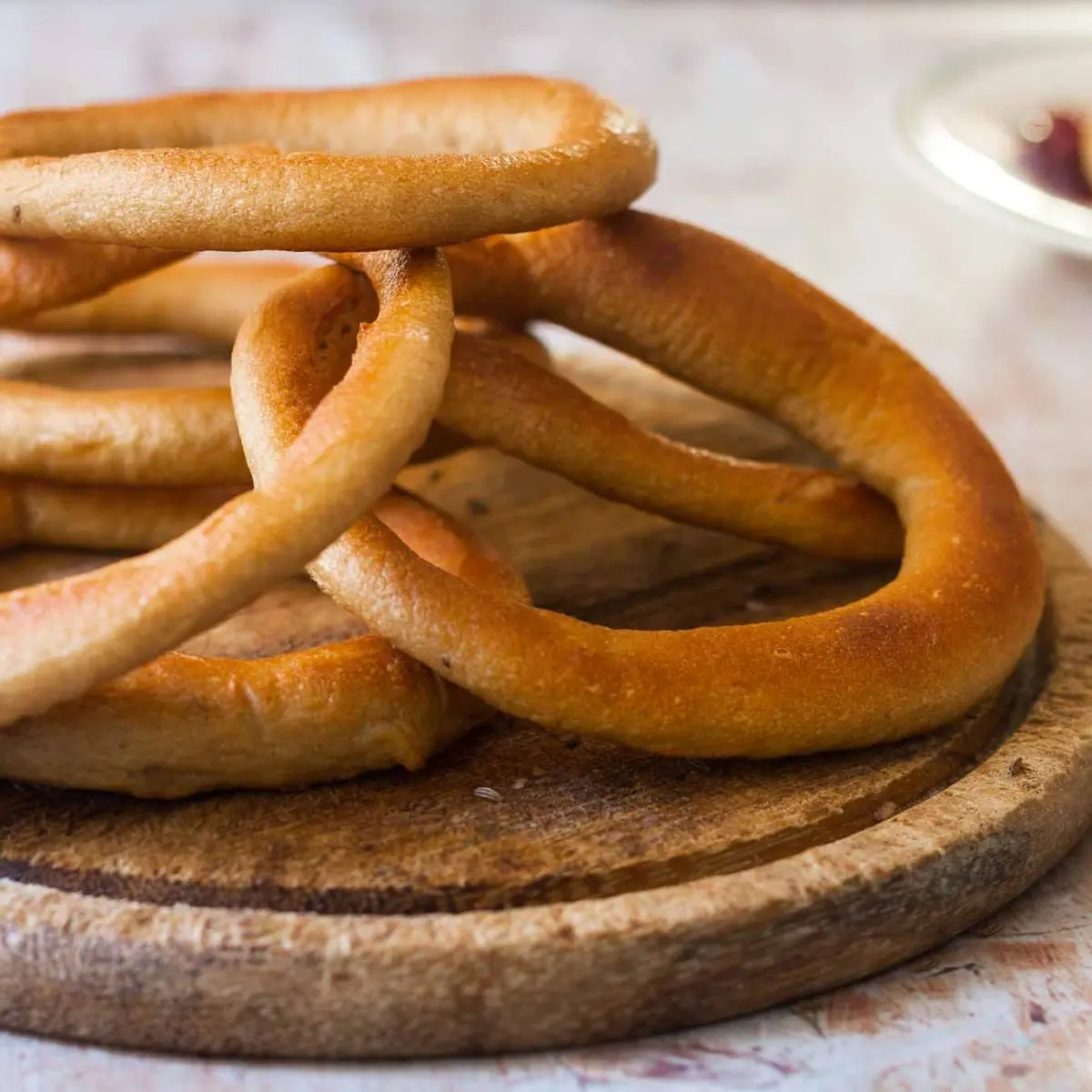
- Prep time
- 14 min
- Cook time
- 31 min
- Yield
- 18 servings
- Difficulty
- HARD
Ingredients
- For the bagel dough:
- 100 g (3.5 ounces) medium-dark rye flour (Type 1150)
- 400 g (14.1 ounces) unbleached "first clear" wheat bread flour (Type 1050)
- 10 g (0.35 ounces) salt
- 1/2-1 tsp caraway seeds, coarsely ground
- 1 tsp honey
- 100 g (3.5 ounces) lukewarm whole milk, about 85 °F (30 °C)
- 250 g (8.82 ounces) lukewarm water, at about 85 °F (30 °C)
- 10 g (0.35 ounces) fresh yeast
- For blanching the bagels:
- 1.5 l (1.6 quarts) water
- 1 tsp salt
- 1 tsp baking soda
Instructions
- 1
Assemble and rise the dough:
- 2
Combine the rye and wheat flour in a large mixing bowl and add the salt, caraway seeds, and honey. Mix briefly.
- 3
In another bowl, combine the milk and water and whisk in the yeast until dissolved. Add the liquid to the flour mixture and knead the dough until smooth and elastic. I recommend to knead it by machine as rye flour is very sticky. Mix the dough on the lower setting of your stand mixer for about 2 minutes followed by 8-10 minutes of kneading on the high setting. Cover the kneaded dough with plastic wrap and leave it to rise in a warm spot for about 45 minutes.
- 4
Shape and proof the bagels:
- 5
Transfer the dough onto your generously floured working surface. Knead it briefly to deflate it. Then divide the dough into 45-50 g (1.6-1.8 ounce) pieces. Smooth out the surface of the individual dough pieces by rotating them under the palm of your hand to form a small ball as if making bread rolls. Roll the balls into long sausages, about 0.5 inches (1.3 cm) in diameter. Lightly wet both ends of the sausages and seal the bagels. Make sure to pinch together the ends tightly so they won't tear apart. Place the bagels on a parchment-lined baking sheet and place them in the refrigerator overnight. You don't need to cover them. They are supposed to form a skin and dry out on the surface a little.
- 6
Blanch and bake the bagels:
- 7
Preheat your oven to 390 °F (200 °C). Fill a casserole dish with boiling water and place it on the lower rack of your oven.
- 8
Heat the water together with the salt and baking soda in a pot until simmering. Blanch the bagels in the hot water for no more than 30 seconds. They're very thin, so you won't need to turn them. Use a spider to transfer the bagels onto a parchment-lined baking sheet. You can optionally sprinkle the bagels now with some whole caraway seeds or sea salt. However, I'm not a fan of sprinkling them with toppings which is why I omit this step in my recipe.
- 9
Bake the bagels on the middle rack of your pre-heated oven for 20-25 minutes. They're done once they've developed a crispy golden-brown crust. You need to bake the bagels in batches as all of them won't fit on one baking sheet. It's best to keep the raw bagels in the fridge and blanch them just 5 minutes before the previous batch of bagels comes out of the oven.
- 10
Once you take the bagels out of the oven, lightly spray them with water to give the crust a nice sheen. Let them cool down for 10 minutes before eating. These bagels need to be eaten the day you bake them. Always freeze any leftovers immediately to prevent them from drying out. If you forgot to freeze your leftovers, you can turn the bagels into the traditional bagel soup ('Beugelsuppe'). To make bagel soup, tear the stale bagels into small pieces and ladle hot beef broth over them. Leave to soak for about 5 minutes and garnish with shredded cheese and fried onions.