The Best Honey Whole Wheat Bread
My recipe for a slightly sweet pan loaf (thanks to the added honey) with a large whole grain percentage yet a soft crumb and crust—it's perfect for toast and sandwiches.
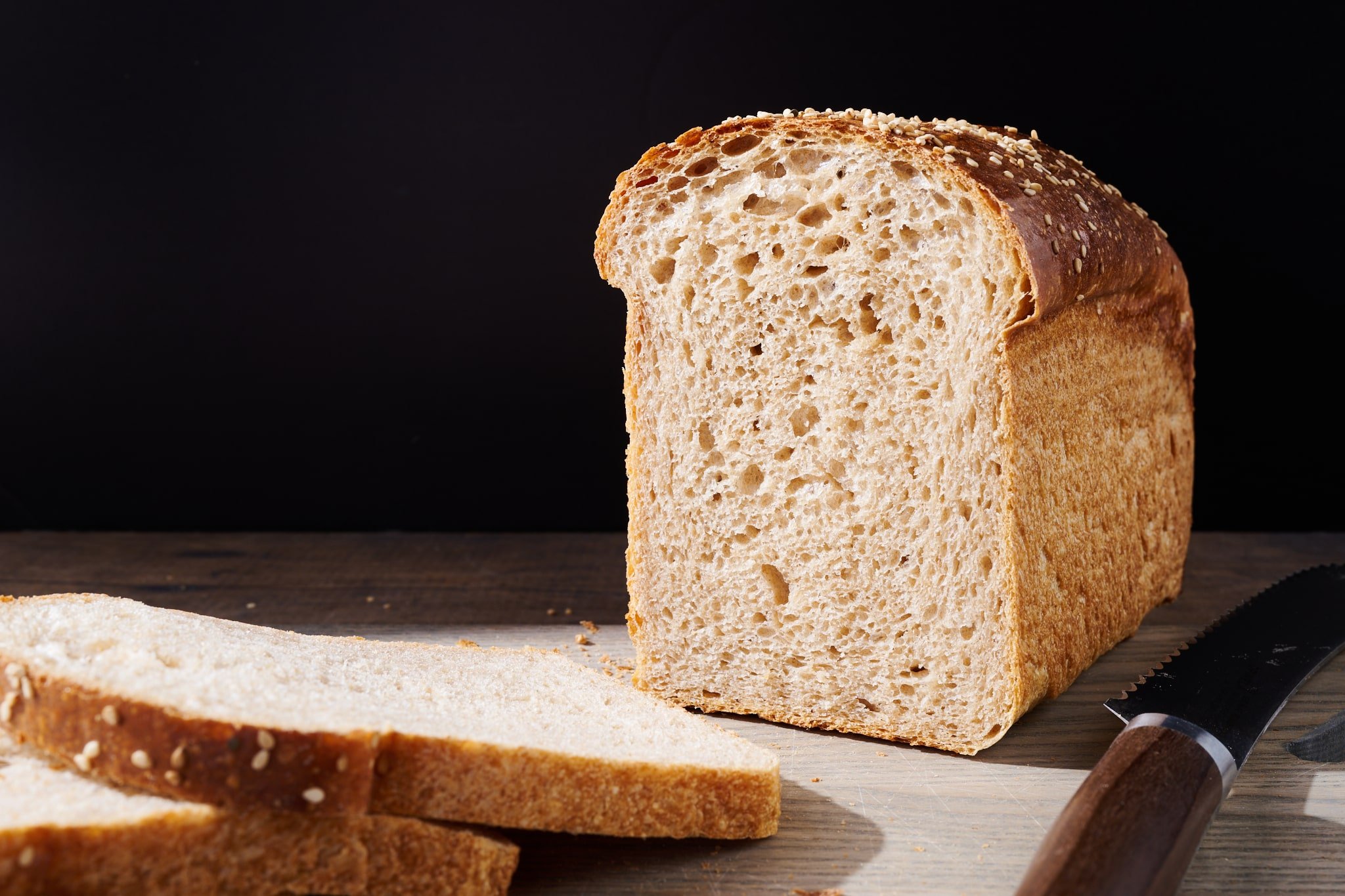
- Prep time
- 24 hr
- Cook time
- 55 min
- Yield
- 2 servings
- Difficulty
- HARD
Ingredients
- 90 g white flour
- 90 g water
- 45 g ripe sourdough starter, 100% hydration
- 90 g whole wheat flour
- 135 g boiling water
- 360 g white flour
- 360 g whole wheat flour
- 54 g egg, beaten (About 1 large)
- 54 g unsalted butter
- 36 g extra-virgin olive oil
- 45 g honey
- 423 g water
- 17 g fine sea salt
- 225 g ripe levain
- all of the yudane
Instructions
- 1
– 9:00 a.m.Mix the levain ingredients in a jar and leave them covered at a warm temperature, 74-76°F (23-24°C), to ripen for 5 hours.
- 2
– 9:10 a.m.Mix the yudane ingredients in a small heat-proof bowl until a paste forms. Cover and set aside.
- 3
– 2:00 p.m.Cut the butter into ½-inch pats and let warm to room temperature. To the bowl of a stand mixer with the dough hook attachment, add the flour, water, egg, olive oil, honey, salt, ripe levain, and yudane. Mix on low speed for 1 to 2 minutes until the ingredients come together. Increase the speed to medium and mix for 5 to 7 minutes until the dough smooths and begins to cling to the hook. If the dough is too dry, add a splash of water to soften, but be conservative. Let the dough rest in the bowl for 10 minutes. Turn the mixer on low speed and mix for 2 to 4 minutes until the dough gains more strength and begins to cling once again to the dough hook. Next, with the mixer running, add the room temperature butter, one pat at a time. Adding all the butter will take 4 to 6 minutes. Transfer the dough to a bulk fermentation container and cover.
- 4
– 2:30 p.m. to 6:00 p.m. (3 1/2 hours)Give the dough 2 sets of stretches and folds during this time, in 30 minute intervals. After the second set, let the dough rest, covered, for the remainder of bulk fermentation. The dough is ready when it is smooth, puffy, and well-risen.
- 5
– 6:00 p.m.Fill a small bowl with water and place it next to your work surface. Scrape the dough onto a clean counter and divide the dough into 2 equal pieces. Then, preshape each piece into a loose round. Let the dough rest, uncovered, for 35 minutes.
- 6
– 6:40 p.m.Grease a 9 x 4 x 4-inch Pullman pan with a neutral-flavored oil. Shape into a long tube and place in the pan.
- 7
– 7:00 p.m. to 8:00 a.m. (overnight)Put the pans in a large, reusable plastic bag and seal shut. Place the pans in the refrigerator to proof overnight.
- 8
– 8:00 a.m. to 9:00 a.m., the next dayRemove the covered pans from the refrigerator and let them proof, at room temperature, for about 1 hour, depending on the temperature in your kitchen. The dough is ready to bake when it is puffy to the touch and about 1-inch below the rim of the pan. If you see any large bubbles form on the surface, gently pat them down to disperse.
- 9
– 9:00 a.m., the next dayPreheat the oven to 400°F (200°C). In a small bowl, whisk together the egg, milk, and salt. Uncover the dough and brush on the egg wash. Next, sprinkle on any desired toppings: oats, sesame seeds, or benne seeds. Slide the pans into the oven and bake for 20 minutes. Then, reduce the oven temperature to 350°F (175°C), rotate the pans back to front, and continue to bake for 25 to 30 minutes more. When done, the loaves should have an internal temperature of around 204°F (95°C), and the crust should be deeply colored and shiny.