Edamame
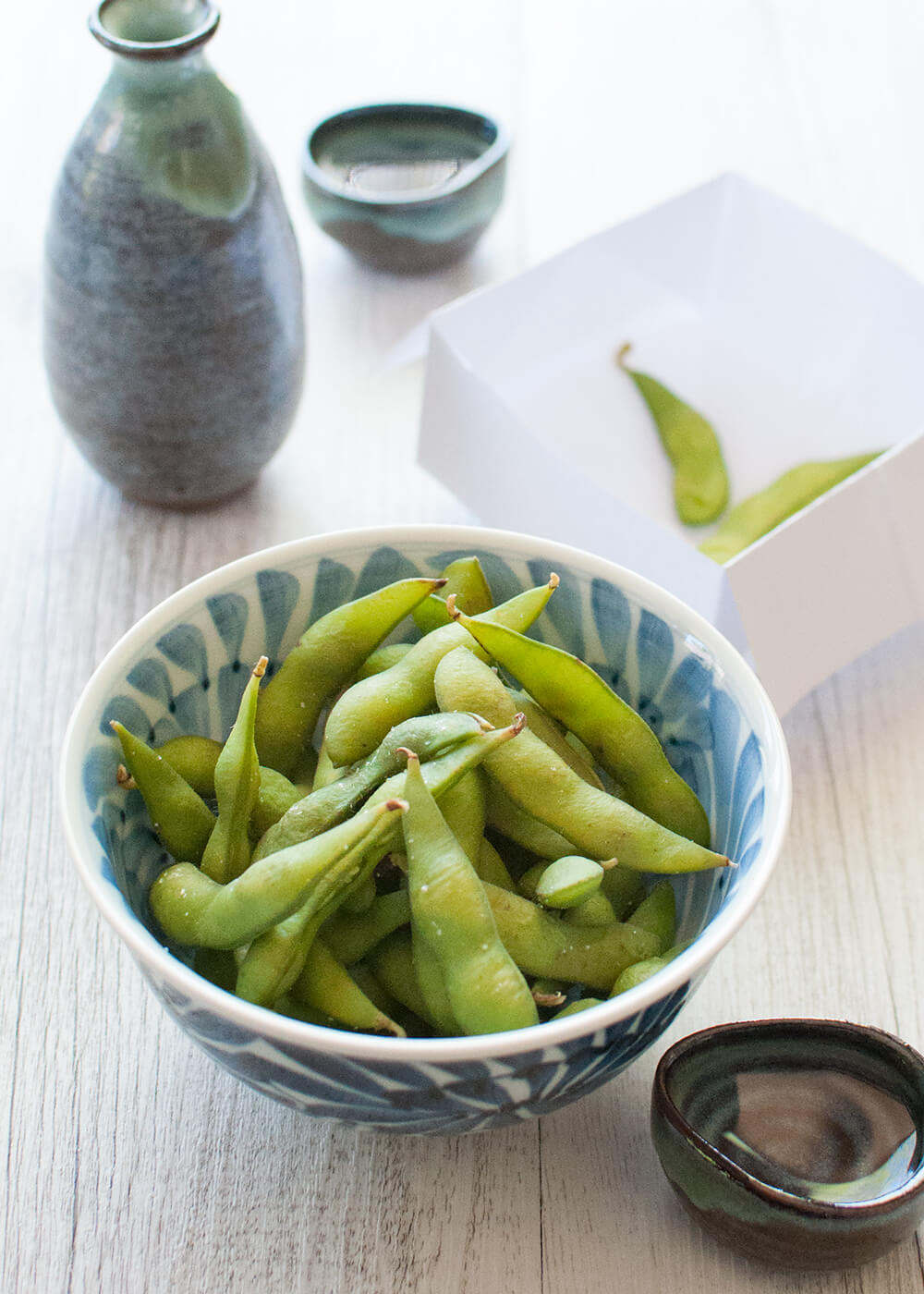
Edamame is served at Japanese restaurants, usually listed under appetiser but you can make it easily at home and it’s much cheaper. Perfect snack for a crowd. It goes very well with drinks, particularly beer.I will show you two different ways of cooking edamame - the boiling method and the sautéing & steaming method with flavouring.Prep Time and Cook Time are based on Sautéing & Steaming Method. The boiling method takes less than 5 minutes to cook in total.
- Prep time
- 6 min
- Cook time
- 6 min
- Yield
- 4 servings
- Difficulty
- MEDIUM
Ingredients
Quantities are shown as originally provided.
- 400 g (0.9lb) unsalted frozen edamame ((note 1))
- ½ - 1 tsp salt
- 2 tsp olive oil ((note 2))
- 1 tsp salt diluted in 200ml water
- Flavouring ((optional, note 3))
- 2 tsp lemon zest
- Pepper
Instructions
- 1
Boil water in a large sauce pan. Add a pinch of salt (not in ingredients) and frozen edamame pods.
- 2
When pods start floating, cook for 30 seconds to 1 minute, then drain.
- 3
While edamame pods are still steaming, sprinkle salt and toss to coat salt evenly.
- 4
Cool them down quickly with a fan or by leaving them in the cold place. (note 4)
- 5
Serve chilled (or room temperature) edamame in a bowl or a plate (note 5).
- 6
Place frozen edamame on a large plate and defrost them in microwave (note 6). It took about 5½ minutes in my microwave using the defrost feature.
- 7
Add oil to a large fry pan over medium high heat. Add edamame pods and sauté for about one minute, shaking fry pan and flipping pods occasionally, until the pods start getting burnt where the surface touches the fry pan.
- 8
Reduce the heat to medium and add water with salt. Place a lid on and steam for about 2 minutes. Shake the fry pan occasionally.
- 9
Remove lid and continue to stir until the water evaporates completely.
- 10
Sprinkle lemon zest and pepper, mix and turn the heat off.
- 11
Cool them down quickly with a fan or by leaving them in the cold place. (note 4)
- 12
Serve chilled (or room temperature) edamame in a bowl or a plate (note 5).