Authentic Vietnamese Beef Pho (Phở Bò)
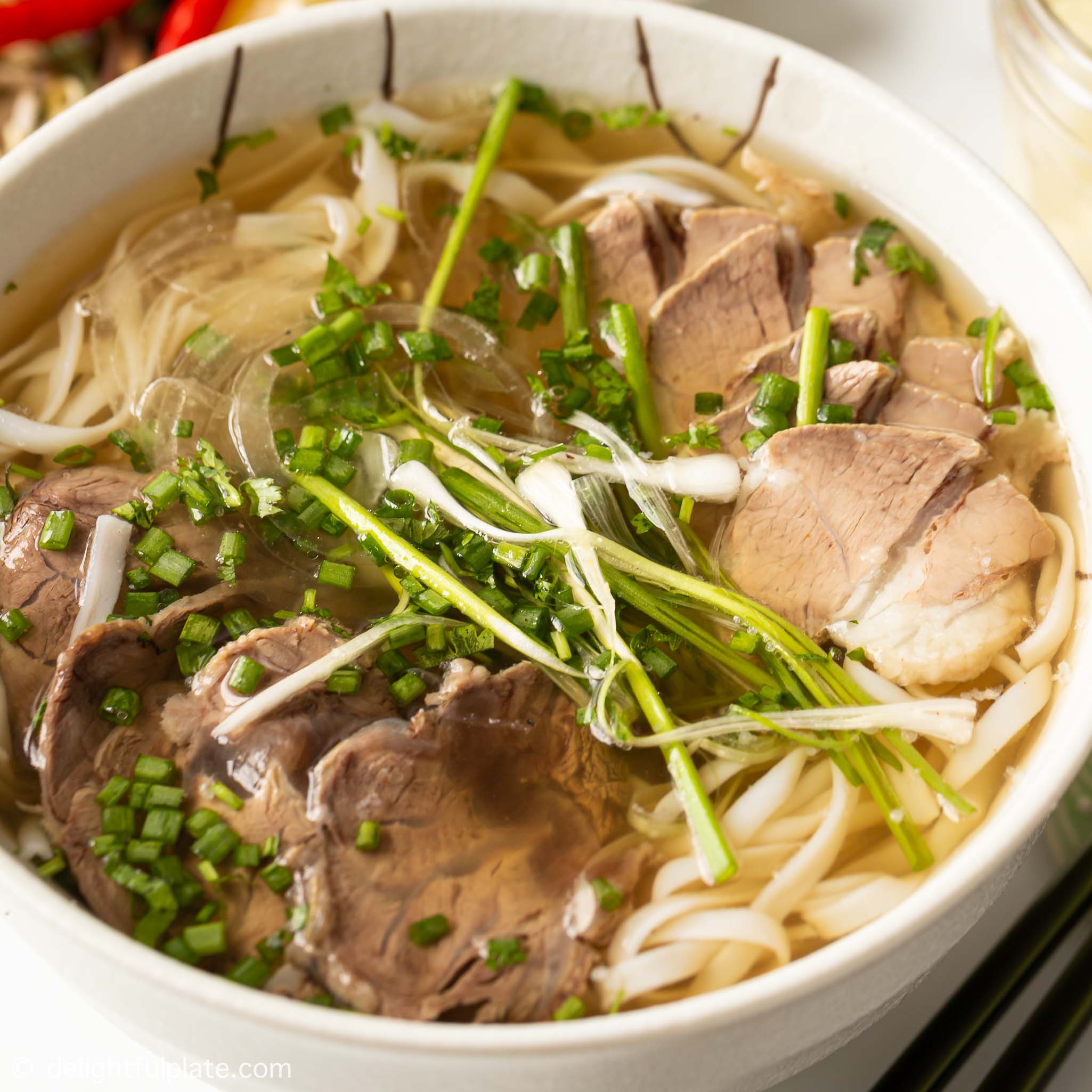
Phở Bò (Vietnamese Beef Pho Noodle Soup) is the national dish of Vietnam, a dish that many Vietnamese hold dear to their heart. Learn the authentic way to make beef pho and serve it like a true Vietnamese.
- Prep time
- 30 min
- Cook time
- 6 hr 30 min
- Yield
- 6 servings
- Difficulty
- HARD
Ingredients
Quantities are shown as originally provided.
- 3 lbs beef bones
- 1.25 lbs beef brisket
- 1 lb beef shank
- 14½ cups water ((about 3.75 quarts))
- 1 tablespoon salt ((and more for seasoning))
- 1 large piece of cassia bark or 2-3 cinnamon sticks ((about 0.2-0.25 oz))
- 6 star anises
- 6-7 cloves
- 1 tablespoon coriander seeds
- 2 teaspoons fennel seeds
- 1½-2 black cardamom pods, crushed open
- 2 medium yellow onions, skin-on, slice in half ((about 12 oz))
- 2 big thumb-sized pieces of ginger, slice in half lengthwise plus 2 more slices ((about 2.5 oz))
- 4-5 shallots
- 1 tablespoon fish sauce ((to taste))
- 1 tablespoon rock sugar
- 1.5-2 lbs cooked rice noodles
- thinly sliced steak, such as tenderloin or sirloin ((optional, if you want to have rare beef pho))
- 1 medium yellow onion, thinly sliced into half moons ((try to make them paper-thin))
- white scallion part, shredded
- green scallion part, thinly sliced
- cilantro, thinly sliced
- freshly-cracked black pepper
Instructions
- 1
Par-boil beef bones in plenty of boiling water for 10 minutes then transfer to a bowl of cold water and clean the bones. Bring a stock pot with 3.75 quarts of water to a simmer, then add the bones together with 1 tablespoon of salt and 2 slices of ginger (about 2-inch long).
- 2
Let everything come to a boil and skim off any foams, then reduce to a simmer. Cover with the lid askew and simmer very gently for 6-8 hours.
- 3
While simmering the bones, use kitchen twine to tie the beef brisket and shank. Par-boil them in boiling water for a couple of minutes. Rinse and add them to the stock pot. Adjust the heat to maintain a gentle simmer and skim off foams. Cover with the lid askew.
- 4
Cook the beef brisket and shank until tender to your liking. Beef brisket may take 2.5-3 hours and beef shank may take 1-1.5 hours. Once they are ready, remove them from the broth and add them to a bowl of iced water. Once cool, refrigerate them if the broth isn't ready yet.
- 5
About 2.5 hours before finishing simmering the broth, char onions, ginger and shallots (all with skin-on) on a grill pan or broil in the oven. It may take 10-15 minutes and you will see charred marks on their skin. The onions will feel softer with some juices bubbling. Peel off the skin and blackened part from the charred onions, ginger and shallots.
- 6
In a skillet over medium-low to medium heat, toast the spices for 2-3 minutes until fragrant. Be careful to avoid burning them (especially the cloves). Add them to a spice bag.
- 7
Skim off excess fat from the broth (note: leave some fat in the broth). Place the spice bag, onion, ginger and shallot in the stock pot and simmer them in the broth for about 2 hours prior to serving, then remove them.
- 8
Right before serving, season the broth with additional salt (I often add another teaspoon of salt), fish sauce and rock sugar to taste. Also check to see if too much water evaporates and you can add a splash of water to the broth if needed. Each bowl needs about 1½-2 cups (360-480ml) of broth depending on size (medium or large).
- 9
Slice beef brisket and shank thinly against the grain.
- 10
Place rice noodles in serving bowls. Top with sliced cooked beef, raw beef slices (optional), thinly sliced onions, thinly sliced scallions, cilantro and freshly cracked black pepper.
- 11
Bring the broth back to a boil. Add the white parts of scallions to the broth to poach for several seconds, and then immediately ladle the soup into pho bowls. Serve right away with accompaniments of your choice. See list of accompaniments in the Notes below.