Wu Gok 芋角 (Deep-Fried Taro Dumpling Puffs)
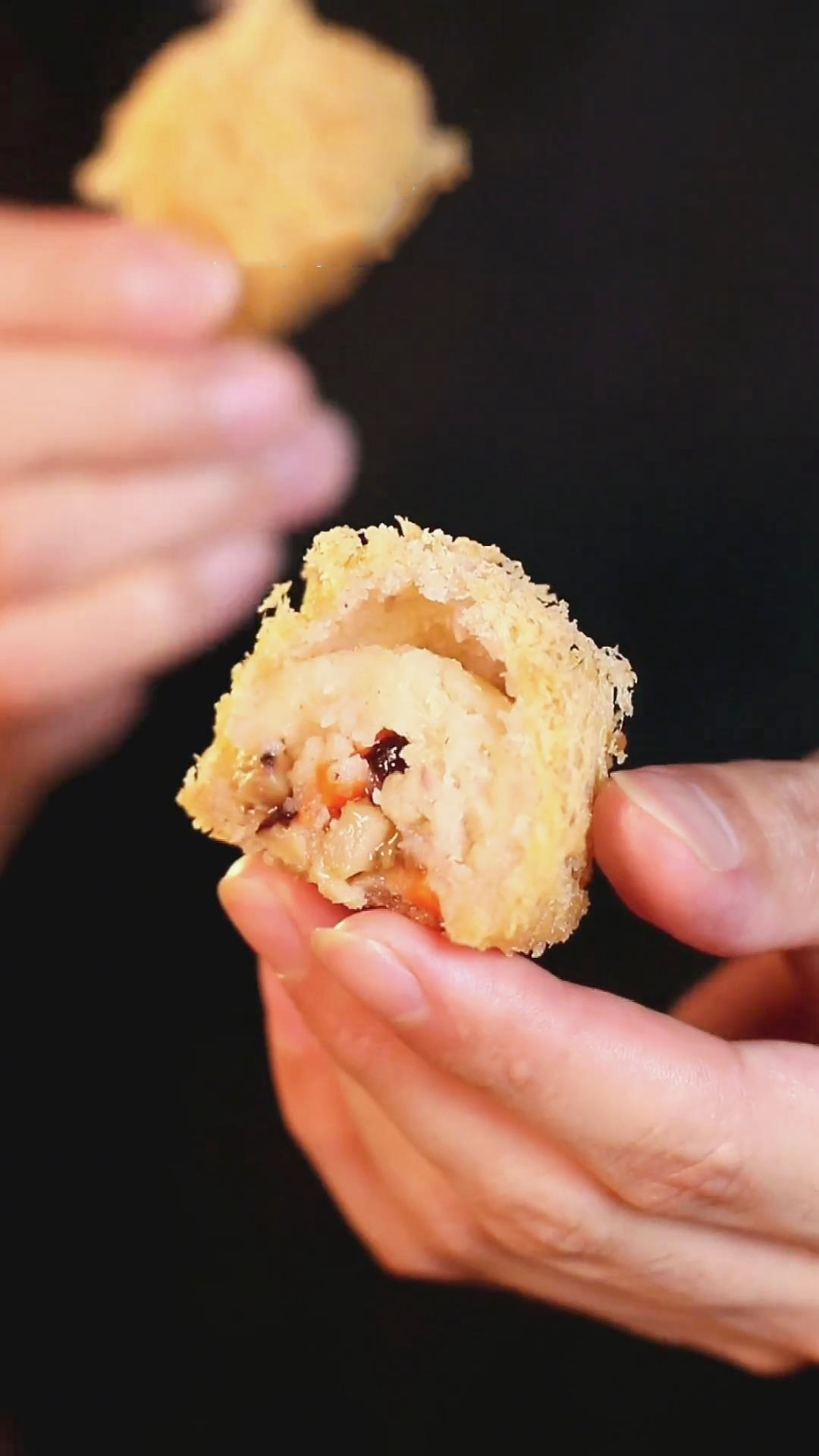
Wu gok (芋角), or deep-fried taro dumpling puffs, is a popular dim sum dish for yum cha or Cantonese brunch. It combines two contrasting textures: a delicate, flaky outside crust and a soft, moist center. Create this dish with its signature taro-filled wrapper and flavorful filling made with meat and vegetables.
- Prep time
- 30 min
- Cook time
- 15 min
- Yield
- 4 servings
- Difficulty
- MEDIUM
Ingredients
Quantities are shown as originally provided.
- 250 g of taro
- 100 g of wheat starch
- 150 g of boiling water
- 5 g of Chinese five spice powder
- 5 g of salt
- 5 g of sugar
- 70 g of lard
- 70 g of butter
- 100 g of pork belly
- 30 g of mushrooms
- 50 g of carrots
- 20 ml of water
- 1 tsp of black pepper powder
- 1 tsp of salt
- 1 tsp of sugar
- 1 tsp of Chinese rose wine
- 1 tsp of dark soy sauce
- Cornstarch slurry (prepared separately)
- Oil for deep-frying
Instructions
- 1
Peel and steam the taro until soft enough for mashing.
- 2
Cook the wheat starch with boiling water and mix it evenly. Take it out of the bowl and press it with your hands to form a round ball.
- 3
Mash the steamed taro and combine it with the wheat starch mixture. Make sure it is evenly distributed.
- 4
Then, add Chinese five-spice powder, salt, sugar, lard, and butter. Mix thoroughly and refrigerate for 30 minutes.
- 5
In a pan, fry the pork belly. Then, add the diced mushrooms, diced carrots, and 20ml of water.
- 6
Season with a dash of black pepper powder, salt, sugar, Chinese rose wine, and dark soy sauce.
- 7
Pour the prepared cornstarch slurry into the mixture and stir it in thoroughly. Wait for the meat mixture to thicken.
- 8
Assemble the dumpling by first shaping the taro dumpling mixture into a thick circular wrapper and placing the filling in the center.
- 9
Seal the dumpling by shaping it into a round ball with both hands.
- 10
Heat the oil to about 180°C or 356°F and fry the taro dumpling until it turns into a golden yellow taro puff. Make sure to fry the taro puffs at the right oil temperature. The temperature should not be too high or too low.